Meter Bridge is used to calculate the unknown resistance. It is the practical application of Wheatstone Bridge.
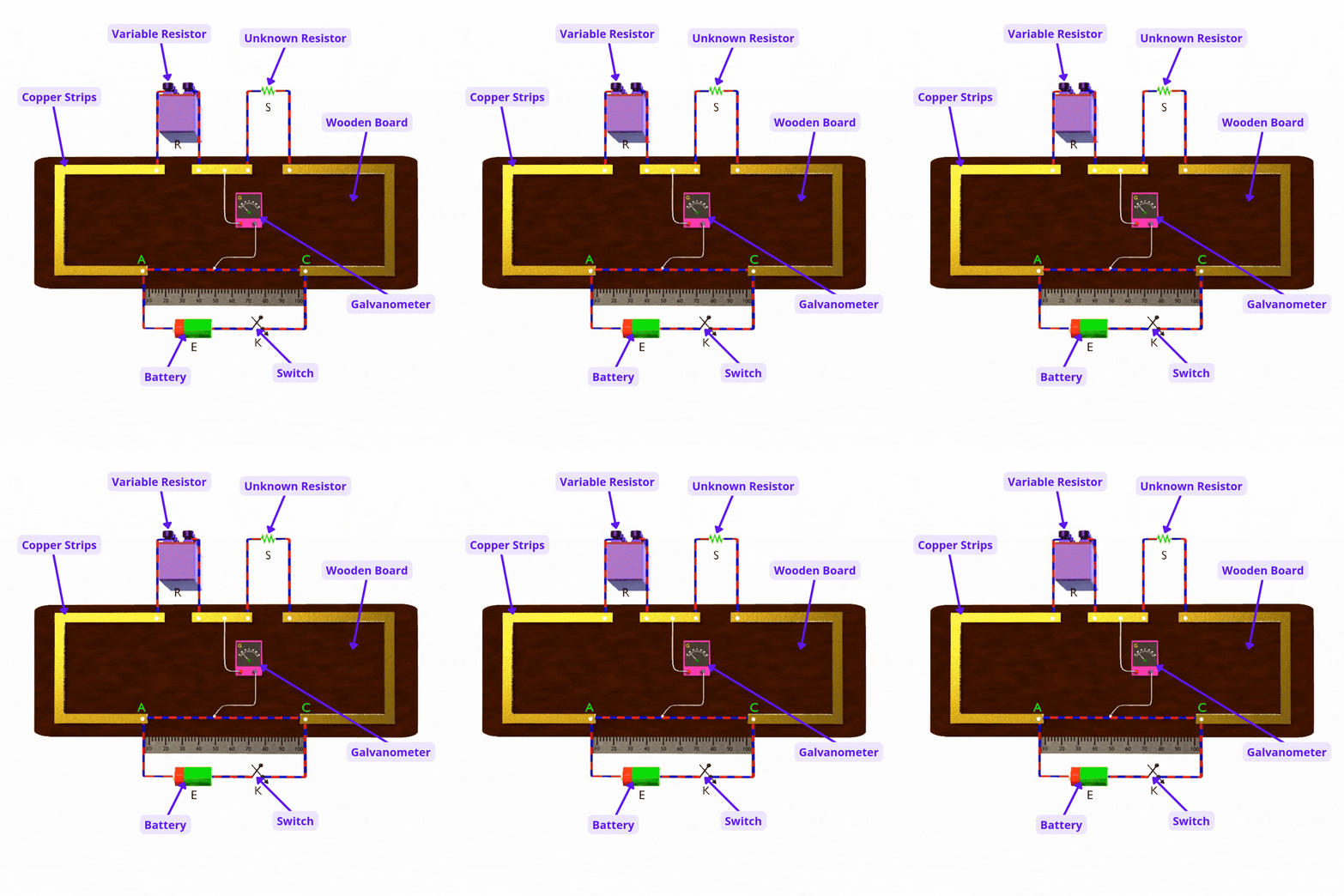
A wire of length 1 meter of is stretched on the wooden board.
It consists of copper strips, wooden board, battery, unknown resistor, galvanometer, measuring scale, resistance box, switch.
Contruction:
AC is the wire of length 1 meter which is made up of manganin or constantan and has a uniform cross-sectional area.
After setting a suitable resistance “R” from the resistance box.
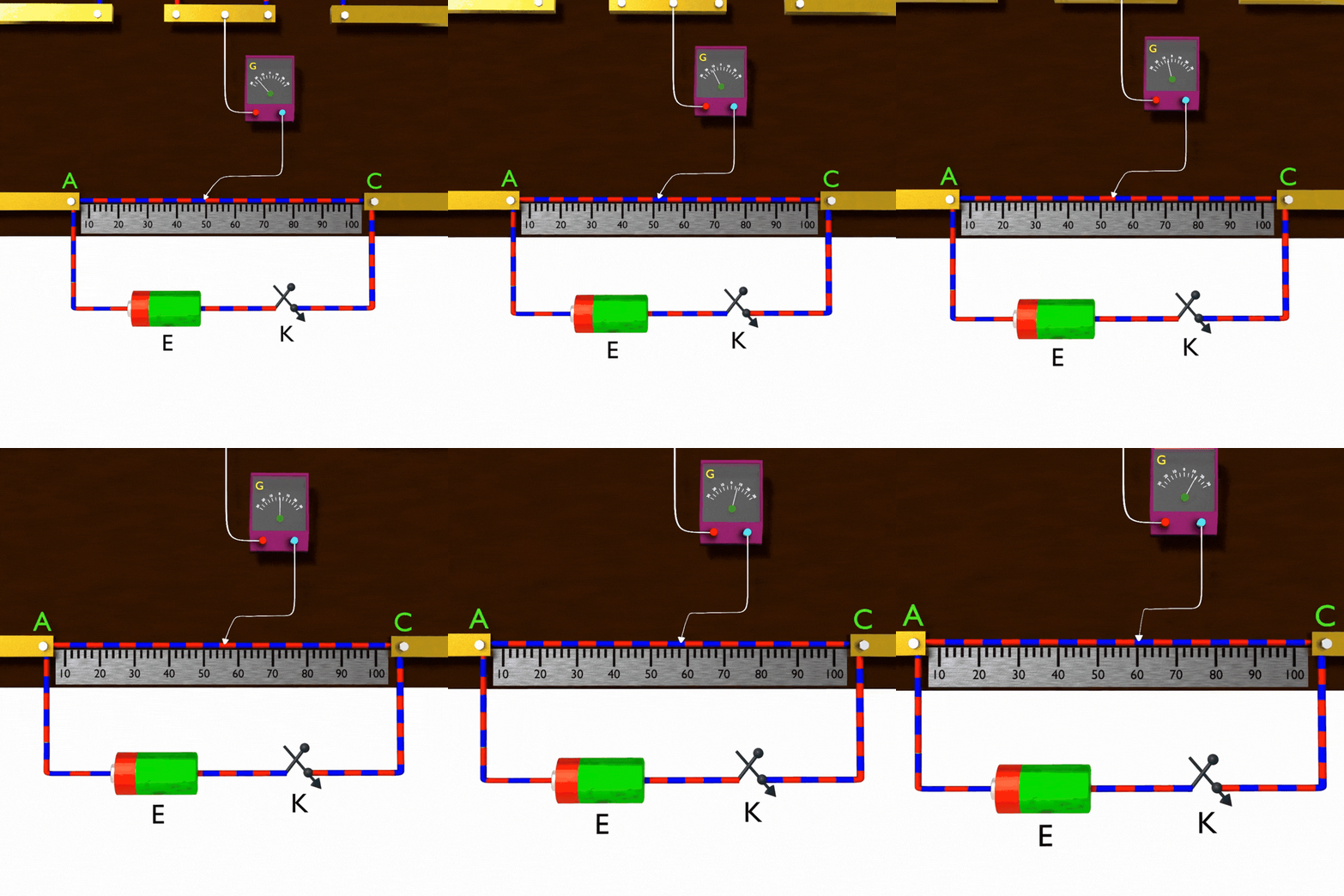
A jockey moved along the wire AC till there is no deflection in the galvanometer.
When jockey is set to the balanced point, at which there is no deflection in the galvanometer. And the current flowing through the galvanometer becomes zero.
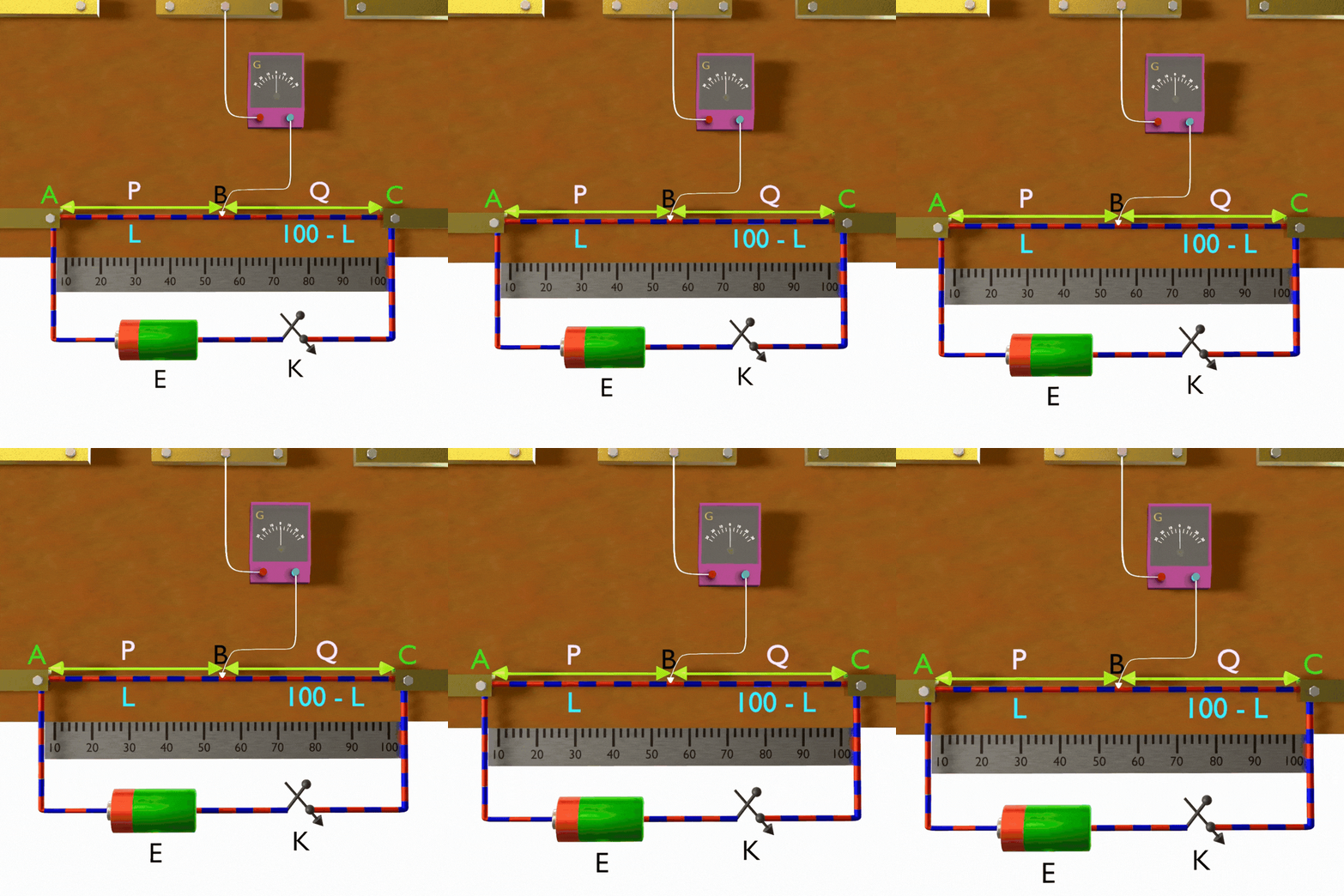
Let ‘P’ is the resistance of a wire of length ‘L’ and ‘Q’ be the resistance of a wire of length ‘100 minus L’.
According to wheatstone bridge,
P/Q = R/S
Resistance = ρ(L/A)
P = ρ(L/A)
R = ρ {(100-L)/A}
ρ = Resistivity.
L = Length.
A = Area.
P/Q = ρ(L/A) / ρ {(100-L)/A}
P/Q = L/(100-L)
Rho = ρ